Western Unions
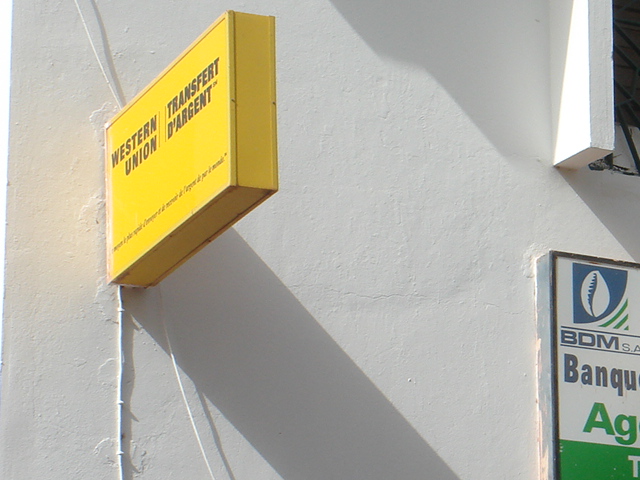
This blog entry about the events of Sunday, March 26, 2006 was originally posted on March 27, 2006.
DAY 10: Van had been asking me for days if I wanted him to arrange a Timbuktu tour for me — a “standard” three-day tour with a private car, where I’d go with a driver in a 4WD from Mopti to Timbuktu, meet a guide, stay one night, tour the city, then ride on a camel into the Sahara to sleep one night in the desert at a Tuareg bedouin camp before taking the 4WD back to Mopti. For days I’d been telling him to wait until we got to that point for me to make that decision, and that time was finally upon us.
Hearing the stories from the others I’d met, a tour set up with Van, a guy I had come to trust, seemed to be the right thing to do, even if it was going to cost me much more than doing it independently. As adventurous as I’ve been in the past, the thought of breaking down 31 times over 24 hours on the public transports through the desert didn’t sound like something I bared to do, so a private car was definitely in my sights. One of the NYU girls even said, “If you can afford a private car, take it.” Boats along the Niger to Timbuktu were out of the question as well since the river was at its lowest levels of the year.
Butch (an Aussie I met in Egypt on a felucca tour) had once written me an email and mentioned that doing things on the super cheap was not “backpacking” but “slackpacking.” Knowing that I actually held steady work back home, I could perhaps do things the “better” way this time, and after doing the math and a little research, I settled on a price of about $700 for the three days (minus drinks) — most of that going towards the private car, driver, and gas for the day-long drives back and forth.
As for a guide I could trust, I had heard Timbuktu, like Mopti was filled with many not-so-reputable ones — like Ali Baba who had ripped off the U of Ghana girl — and I figured I’d go with Van. However, for days he had increasingly been taking cold medicine and was trying to hint to me he wouldn’t be up for it as much as he wanted to, but knew a great guy up there named Hama that was like him. To put my mind at ease, we called him up the night before on his cell phone. To my surprise, Hama spoke very good English, better than Van perhaps, and I was sold. I told Van that casual Sunday night I couldn’t make a solid deal until I knew I had money in my hands.
THE PLAN THAT MONDAY MORNING was for Van to take me to the BDM bank in town — the only place I could get a cash advance off a Visa card — quickly get cash and then ride the two hours to tour the famed mosque of Djenné on its big Monday market day, before returning back to Mopti that night. I had learned my lesson in Zambia to never travel in Africa without a Visa card since MasterCard is nearly non-existent. (American Express you can leave at home.) I had made sure I told my credit card companies that I was going to travel in Africa so there wouldn’t be any weird security flags that shut down the account.
The banks in Africa aren’t as customer-friendly as they are in the Western world. There’s no air-conditioning, no free toaster, not even a security glass at the teller counter (only guys with guns). It was pretty busy at the teller’s line, but luckily special matters only had a few people waiting in a little room. Using broken French and some translations from Van, I managed to give a Visa card to the one woman who handled cash advances. I asked for CFA 600,000 to cover me for the rest of my trip and she said the limit was 300,000. Luckily I had two Visa cards with me.
I waited and waited inside the room while Van made some phone calls on his cell outside. Old men in turbans, holding briefcases came in and out — some wearing mysterious sunglasses that made them look like spies.
“You got it yet?” Van asked me, checking in.
“I’m still waiting.”
Van waited next to me, but gave up his seat for an old man. Then he went off to smoke another Dunhill cigarette.
The banker woman in traditional Malian garb came to me and said something in French that was too fast for me. Something about “impossible” and “electronique.” Somehow I figured I had a problem, a major one. Mali had been more expensive than I had anticipated and I was at the bottom of the barrel in terms of cash. If I couldn’t get any cash, I would have no choice but to use my last two emergency travelers cheques to get a ride back to Bamako and go right back to New York. The mission to Timbuktu will have failed.
In a panic, I ran out to Van to help me translate. When we met the banker woman again, she was busy handling another African woman who didn’t know any French — all I heard was her saying “But I have money in the bank!”
“I think we have the same problem,” I told her. She never gave me her name but her Visa card said “Gloria.” “Where you from?”
“Canada.”
“I’m from the States.”
“This is a nightmare!” she vented to me.
“I know, if I don’t get money, I’m stuck here.”
“I know!”
It was also her plan to quickly get cash off her Visa and go to Djenné to see it on the big Monday market day. She was furious though, as she had been at the bank for two hours thus far with no progress. I followed her as she barged in on the office of the bank manager, a mild-mannered guy in a suit that barely spoke English. Van had to step in a couple of times to translate for us.
In the end, we had two different problems. Gloria merely had a low cash advance allowance — only about $60 — while my Visa cards were too “new.” According to the procedures of my Capital One and Chase cards, cash advances off my Visas couldn’t be made without swiping them through a reader.
“No, you don’t have to swipe it!” I said. “You can just write down the numbers! Look here… numbers [just like her cards].”
The manager laughed. “No, c’est impossible.”
I didn’t know what to do but stood quietly and stared blankly into space, almost on the verge of tears. “Are you good?” asked the manager.
“I’ll be good if you give me money.”
To prove to me it was impossible to get a cash advance, they pulled out the one credit card swiping machine they had, stored in a box, in the closet. It wasn’t hooked up to anything and there were no immediate plans to do so. Van told me they probably didn’t set it up because if anyone made a mistake, they’d probably lose their job — plus there was no real demand for cash advances anyway amongst the regular Malian patrons.
Gloria tried to make some progress with a much lower amount than she needed — it would be better than nothing — while I remained on my wit’s end. “What about Western Union?” I asked the manager. There was a Western Union sign outside.
“Western Union work perfectly,” he said. “No problem.”
I took a breath. “I have to call New York right now.”
Van handed me his cell phone.
FOUR THOUSAND MILES WEST, in Teaneck, New Jersey, the phone rang at my parents’ house. I lucked out on time zones; they were just waking up to go to work.
“Ma,” I said.
“Hello?”
“Ma.”
“Hello?” The connection was getting increasingly staticky.
“It’s Erik. Can you hear me?”
“Hello? Erik!”
“I’m stuck in Mopti…”
I heard nothing, and the phone went dead. Van hadn’t had a full charge on his battery since our trek to Dogon Country. I tried calling back several times, but it wouldn’t connect. I worried that my mother would think I’d been kidnapped or something.
Van and I ran off to a cybercafe/calling station where I was able to use a land line. “Ma, I’m stuck in Mopti. My Visa cards don’t work here,” I finally told my mother.
The whole money wire transfer thing was new to either of us but we gave each other enough information to figure it out. “How can I reach you?” she asked.
I gave her a number. “It’s Van’s cell phone. He’s taking care of me.” And that he did, paying for my land line call to the U.S.A.
There was nothing to be done but just wait for my mother to call. We walked back to the hotel, so Van could charge his phone. On the way, Van stopped for cigarettes and a tout tried to sell me something.
“I told him to leave you alone,” Van told me. “‘He has money problems.’”
At the hotel I was served some breakfast, although it was hard for me to eat anything. An hour went by and nothing — but then the phone starting ringing with nothing showing up on the caller ID.
“I think it’s for you,” Van said, handing me the phone.
“Hello?”
“Van?”
“Ma.”
“Van? Is this Van?”
“Ma, it’s Erik.”
“Oh Erik! Okay…”
We worked it all out and realized that Western Union was surprisingly really easy. She had called in the nick of time too; the bank would close at noon for a three-hour siesta, and it was already almost 11:30.
BACK AT B.D.M., I had to fight a line at the Western Union counter. A uniformed man claiming to be the Minister of Tourism checked to see if I was okay in case Van was an unfavorable tout. I told him he was with me.
It took a little time and patience, and for me to rewrite my cash form since I messed up the first time, but in the end, it paid off as I soon became a millionaire (in local currency); my mother had sent me more than enough to handle the Timbuktu trek and further travel just in case. Having over a million CFA in my hands I was worried I’d be robbed, but I tried to remain discreet about everything when I counted the bills. I was definitely happy to have Van watch my back.
“I think we can forget about Djenné today,” Van said.
“Yeah, I know. It’s okay.”
THE REST OF THE DAY wasn’t as stressful. We worked out the Timbuktu deal, and Van organized the car and driver — surprisingly from the guy at Mali Voyages I had spoken to four days before. It seemed everything was falling into place, and I’d be on my way after one more day of rest to do nothing in Mopti but catch up on Blog duties.
That afternoon and evening, I just wanted to chill out with Van, especially since it would be the last I’d see of him since he was desperate to get back to Segou the next morning to go to the hospital to get his cold checked out. We hung out at Coloumby’s tenement apartment in the suburbs and watched a couple of movies dubbed in French, including The Player’s Club and Three Kings — I thought it was funny that Van and his friends were concerned with me that we were watching a movie that put Americans in a bad light.
“No, it’s okay.”
We all split dinner together, fried fish, fries and bread, over Cokes and teas until Van drove me back to the hotel that night, where we made sure we were on the same page with the Timbuktu tour. I hoped that the people he was sending me to were as good-hearted as he was.
“You come back to Segou, okay?” Van asked of me. “You are my brother. You don’t worry about money. You stay with me for free. We’ll make a big party, eat food, I will be the D.J…. And we can play the Playstation all night. The FIFA!”
“Okay,” I said, shaking his hand, knowing his home was on the way back to Bamako anyway. “Thank you for everything. I will see you in Segou.”
“Okay. See you later.”
“A bientôt,” (“See you later,”) I said.
Van rode off into the night to ride out west in the morning, leaving me for the first time since Segou, alone again.
Next entry: The Slackpackers
Previous entry: Casual Sunday
Commenting is not available in this channel entry.
Comments for “Western Unions”
Wow…..overload! I hope I am first! It is good hear that everything is
going well except for that blasted heat!
RosePosted by Anonymous on 03/27 at 01:18 PM
hooray for mrs trinidad!
Posted by Les Morceaux de Reese
Hey all… the internet is a bit faster today in Mopti, although it’s
still pretty painfully slow. As you may have figured out, I am uploading
pictures in piecemeal, in no particular order, over the past six
entries… sorry, you’ll have to go back to old entries and figure out
which ones are new when I upload them and add new links as needed. Also
please forgive the non-rotated ones; it takes forever to rotate them
here, and you can just rotate them yourself in FLICKR with the option in
the toolbar.As far as writing entries goes, I’m up to date, up to the end of
yesterday, so at least I’m on schedule with that. I’ll be in the N.I.Z.
for another three days as I head up to Timbuktu—although I may drop a
comment in since I’ve been told that there’s actually an internet cafe
up there in the middle of the Sahara…Thank you all for reading, and I’ll try to get more of these pictures up
before I leave tomorrow morning…Posted by Erik TGT
this entry is like an episode of 24
Posted by terence on 03/27 at 02:21 PM
Okay… I’ve spent three whole hours at the internet… more people are
here now, so it’s starting to clog up… but I think I’ve managed to put
enough photos up for you…When markyt (TGBTGBTB) has a chance, he’ll fix all the photos need to
rotated…That is all for now… Godwilling, the next time you hear from me will
be from a cybercafe in Timbuktu!doug e.
Posted by Erik TGT
Erik - Thank you for putting in a long day at the internet cafe for us.
Love the photos and am enjoying the blog. Here’s hoping the Timbuktu
trip goes smoothly.Posted by Amie on 03/27 at 03:43 PM
Great story, every traveler has to deal with that kind of nightmare, you
did a great job of showing the exasperation and relief! And like I said
2 years ago almost…Your MOM ROCKS!Posted by funchilde
Wow….thanks for the entries.
What ever happened to Gloria?
Posted by Lisa on 03/27 at 04:31 PM
I can’t wait to hear about some of the local characters in timbuktu.
and cheers to markyt for fixing your pictures!
Posted by sara
hey erik..
are you still interested in doing the Lincoln Tunnel 5K run on April
23rd with me? i’m interested although i’m not training as much as i
should. :( any other blog readers interested? you start in NJ, run/walk
through the lincoln tunnel to NY and back. Great cause: Special Olympicshttp://www.sonj.org/Development/LEEventSchedule.php
Posted by Les Morceaux de Reese
pictures are all rotated…be sure to go back and look at them…a bunch
of new wallpaper material..i wanted to do the lincoln tunnel run this year!...but alas…i’ll be on
the road in costa rica..Posted by markyt on 03/27 at 06:50 PM
Markyt is going to Costa Rica? You are indeed a family of globetrotters!
Posted by Janice on 03/27 at 08:46 PM
Are there any good stories going around among the people in Mali about
the 03/29 eclipse?http://sunearth.gsfc.nasa.gov/eclipse/SEmono/TSE2006/TSE2006.html
Posted by camilla on 03/27 at 11:29 PM
I’m gonna miss Van! You must teach me the secret handshake when we meet
up at Trump Tower! Sock Monkey Burrito here we come!Posted by Marsha Marsha Marsha on 03/28 at 12:01 AM
Whew!!! Your mom really came through in the clutch!
Posted by Ali
I must have missed it but what is the significance of the cola nuts? Why
does everyone want one?Posted by anthony on 03/28 at 03:29 AM
GREETINGS FROM TIMBUKTU—the warnings were true so far, it’s just
another city with a popular name… hopefully things will be on the up.
So far, Hama is no Van, and the internet is really slow. I don’t know
when I’ll have the next entry up… perhaps not until (gasp) Monday
morning…LISA: Gloria, I don’t know… I sent Van to look out for her cuz I was
gonna give her some money to help her out, but she was no where to be found.REESE PIECES: Sure, I’ll run the tunnel… who else is in?
JANICE: re: markyt in Costa Rica… That’s why they call us the
“Travelling Trinidads”... my parents get away as much as they can as
well… they were just in the Dominican Republic…CAMILLA: We were just wondering about that as well… seems like no one
here is versed in astronomy…ANTHONY: Cola nuts are like a vice… a bitter nut they eat, from the
coast; they can’t get it in landlocked Dogon… I’m told its very very
bitter… I’m told her in Timbuktu, I have to give offerings of tobacco
leaves…doug.
Posted by Erik TGT by way of markyt on 03/28 at 01:38 PM
still going by Doug with Hama?
Posted by Elisa
Glad to see you’ve dusted off the backpack and are back on the road!!
First time to comment for me as I’ve never followed in “real time”. I’m
loving these pics and the stories that go along with them. What fun!
Keep up the good work:) I can’t wait to rescue my backpack from the
attic…...Posted by Emily on 03/28 at 05:04 PM
Erik, thanks….just looking out for my fellow Canadian

I think next you should check out Tuktiuktuk next.
Posted by Lisa on 03/28 at 05:40 PM
HEY GANG, so far Timbuktu is a bust (I’m not surprised) and Hama is
WAY shadier than Van; sure he knows his stuff about the mosques and
stuff (it seems rehearsed), but other than that, he comes off as a
pretty shady guy. He is not, after all, more English-spoken than Van
at all. Plus, over drinks last night, he’s already asked me if I can
“bring some gifts with him to send in the States”... this is after we
wandered around and he was threatened by some bigger guy about
something, like it was his boss or something.Even more suspicious than Hama, is when we called up Van on his cell
phone last night, and Van tells me “he was robbed of all his money,
all his cards”. (It may be of note that he simply mentioned it when I
asked him how he was, and he wasn’t asking for help or anything; he
just sounded bummed—but who knows?)RIGHT NOW I NEED YOUR OPINIONS AND HELP. I’m really hating the mind
games out here and wish I just booked a self-contained package tour in
Bamako like all the richer French tourists out here. I’m really sick
of this right now—it turns my stomach and I just want to go home.
Man, as odd as it may sound to you, I just long to be an anonymous guy
on a crowded 6 train in NYC where no one is bothering me for anything.
In Mali, you can’t just put your iPod headphones on and ignore
people.Is it possible that Van had built my confidence to guilt trip me into
something to be revealed when I return to him in Segou? Or, do you
think he was legitimately robbed? (Everyone knows everyone and they
all probably knew how much money he had made off of me). Should I
keep my promise of meeting him back in Segou after arriving back in
Mopti (after Timbuktu)? Or should I take the express bus back to
Bamako and get the hell out of here?I wonder about confidence scams because when Hama asked me to
translate an email for him, it seems like he had guilt tripped people
in the UK to send him cash via western union to fix his car. (Hama
has a car; we cruised around Timbuktu in it last night, blasting
hip-hop—funny, huh?) After our brief tour of Timbuktu last night,
I was pretty much just a third wheel to Hama and his boys, feeling
quite uncomfortable, watching soccer live and then on TV.Anyway, I’m just venting right now—although I really want to ask
for your advice out there. Mali is definitely one of the harder
levels in the Game of Travel; I met 2 backpackers in Mopti the night
before and they had thought the same thing. (They were robbed of 400
euros in Mauritania.)The internet is slow here; I probably won’t be in contact unless it’s
a comment again like this one is. Sorry for the entry delays—I’ll
get them up soon! Wish me luck as I’m off to a desert camp for the
night tonight in the Sahara, where the U of Ghana girls had been
robbed by Ali Baba.I’ll keep my spirits up, but they are drying up thin, like the
moisture in the Sahara…e.
Posted by Erik TGT by way of markyt on 03/29 at 09:49 AM
with this spring like weather you should just come back…
that ride on the 6 train the other day…oh so nice…if you know what
i’m saying b…but yeah…i think there is a definite possibility that you could be
getting played like Woody Harelson in White Men Can’t Jump…you know
when Wesley Snipes blows the game and Billy loses all the money…except
in this situation you have no Rosie Perez (or Beyonce) in this case to
intervene in the event something goes stale…slow internet is wack…and there are plenty of pints of beer to be
drank back in the good ole big apple…AND…The Andy Milonakis Show -
The Complete First Season
just came out on dvd!Posted by markyt on 03/29 at 12:17 PM
just think about the alchemist
Posted by Anonymous on 03/29 at 12:27 PM
I have to agree with Markyt some things just are not worth it! This is
suppose to be a vacation right? Seems like just too much hassle and not
enough enjoyment to classify this as a vacation! RosePosted by Rose on 03/29 at 12:54 PM
You should come back to NY and watch reality TV with me and Bob. Gina
got voted off last night.Posted by RachitaBanana on 03/29 at 12:59 PM
ANONYMOUS - i already achieved timbuktu… i think its time for me to go
and be a shepherd again (from ERIK TGT by way of markyt)Posted by ERIK TGT by way of markyt on 03/29 at 01:22 PM
hmm….i hate mind games…especially on a vacation. it’s one thing to
not trust people in your own country but it’s alot worse when you’re
someplace you’re not familiar with and in a language that you’re not
familiar with.that’s such a shame that this goes on there and that tourists you’re
meeting have already have bad experiences. it sounds like a fascinating
and beautiful place nonetheless! i know first hand that not all
vacations are perfect - as you know, i’ve had my passport and wallet
stolen in spain. after that happened, i was more careful, actually ALOT
more careful, but i didn’t completely lose trust in EVERYBODY there. but
your situation seems a little TOO much. it really sucks having to second
guess EVERYONE’s intentions.given that, i would completely respect your decision to come home. i
think you trusting your instincts in that enviroment definitely
qualifies you to pass this difficult level in the Game of Travel. you’re
probably playing the game out there better than most people would have.dag, i barely passed madrid. and that’s probably one of the more easier
levels.:/
Posted by Les Morceaux de Reese
I hate mind games too - I must say, I’ve never experienced anything like
that! We all support you - sometimes adventure leads us into undesirable
places/people as well as good ones. At least now you have an insight
into that. I said on the last blog that we all learn how to deal with
difficult and crazy travel situations from you. I agree with le morceux
- you DO pass the difficult level in the game of travel. Yeah, having my
backpack lost for 5 solo days in Brazil was about all I personally could
handle! Losing trust in people and becoming jaded really sucks but it’s
the consequence of difficult travel, I think.But sometimes a few days go by, you do something different and
everything looks a lot brighter.We still love reading the good and the bad and your thoughts about it.
I’m a fan, Doug!Posted by sara
I think you should trust your instincts. The situation probably feels
shady because it is. Just think of it this way, if you were having the
best time of your life you would extend your stay, but you’re not . . .
so there’s nothing wrong with cutting it short. Besides, you’ve got some
wonderful photos and a fully developed alter-ego named Doug.Posted by camilla on 03/29 at 02:51 PM
and I forgot to say - yes, we completely understand if you want to go home!!
Posted by sara
George - Come home. It’s low tourist season over there and they are
desperate for money. I would not trust them as far as I could throw
them. Van could be a nice guy deep down, but they know that tourists
mean $$$ and desperate times call for desperate measures. This could be
an intricate scam that they have devised. It might not be, but don’t
risk it. You’re not in Kansas anymore.Your next mission in the Amazing Race. Get home safely and meet me at
Trump Tower the night of April 11th. Can’t wait to see you.Posted by Marsha Marsha Marsha on 03/29 at 04:16 PM
Erik, pack it in and come home. Trust your instincts! And I agree with
everything everyone has already said….........
OMG, can you imagine Erik and Markyt as contenders in the Amazing Race?Posted by Janice on 03/29 at 09:47 PM
My $0.02: Go with your gut.
Scam or no scam… advanced level or beginning level… it obviously
sounds like you’re not digging it out there. So keep your cash, come
home, and focus your energies on planning your next trip.As far as your “promise” to Van, lookout for yourself first. Van will
get by without you, and we still think you’re badazz.Posted by Ali
Yeah I agree with Ali. If you’re not having fun then there’s no point in
forcing yourself to stay. Van will forget all about you as soon as the
next traveller comes along.Posted by Anonymous on 03/30 at 01:14 AM
GREETINGS back in Mopti… I’m back after a long journey from the desert
outside Timbuktu, the peaceful, tranquil climax to this crazy trip…before coming back here in tout-filled mopti, i was sort of leaning
towards keeping my promise to van to meet him sunday, but upon arrival
here, his friend Coloumby who was supposed to take me to djenne tomorrow
said that he spoke to van today… “how is van?” i asked.“he’s okay.”
“you sure he’s okay?” no mention of a robbery.
“Yes, everything is fine.”
“And you talked to him today?”
“Yes.”
The lie has been caught.
Game Over.
Markyt and I have already set up a sting to get me the fuck outta dodge…
Posted by Erik TGT
Van sux.
And your spider-sense was dead on.
Posted by Ali
Good call Erik; that’s too bad though. Seemed like a good guy til this
caper.Posted by Dan 3 on 03/30 at 07:37 PM
So, what’s the verdict? Is Mali a worthy destination? Or not worth the
trouble?~Jesus
Posted by nerokerr on 03/30 at 08:58 PM
so i finally got to catch up on the blog, and as usual its great. i like
that your so honest about stuff because not all places can be what we
expect them or what we hope . keep up the good work -that girl from the
northwestPosted by travelgirltiff on 03/31 at 12:02 AM
Gotta agree with everyone else - get back asap. It all sounds really
shady and could get dangerous at any moment.
These touts and with their stupid scams and head games must think all
tourists are idiots. They’re the morons - don’t they realize that
tourists who get screwed tell all their friends back home about their
shitty experiences (which in your case, means THOUSANDS of people) and
the more they keep doing it, the less likely tourists are going to
visit? If they’d just be honest and show some simple courtesy then more
tourists would come and they’d make more money in the long run. Jerks!
Get back home soon, Erik, and get back safe.Posted by Office Samurai
april 1st - rabbits rabbits rabbits. did you say it this morning?? (in
french!) haha. i did. hope it brings you better luck.:( darn…sorry ‘bout the rough times. that sucks, esp since you are
alone. i agree w/the others. come home! we’ll go hang out w/the whale!
use those vacation days on a better trip…hang in there.
(i’m STILL jealous)
(maybe not)—elaine
Posted by Anonymous on 03/31 at 05:29 PM
Go back home, save your money and come visit me in China! Good weather,
good food, the people are for the most part sweet, & I will be there for
all your translation needs free of charge. Whatcha say?Posted by Elisa
Les Morceaux de Reese: count me in for the lincoln tunnel run:) did it
last year. are the prison runners going to be there again?(i’m STILL jealous)
—elaine
Posted by Anonymous on 04/01 at 12:55 AM