My New Beat
This blog entry about the events of Monday, November 08, 2004 was originally posted on November 14, 2004.
DAY 387: Mumbai is India’s showcase modern and cosmopolitan city, or as Let’s Go puts it, “India’s largest city, in attitude if not in population…[uniting] all the country’s languages, religions, ethnicities, castes, and classes in one heaving, seething sizzler of a metropolis.” It is the gateway of India’s international business, its fashion capital and India’s main source of entertainment, with the second largest film industry in the world after Hollywood (hence its nickname “Bollywood”), and it’s Indian pop music scene. In fact, in the Indian Idol reality show (the Indian version of American Idol), people who try out in the first round and impress the judges get overjoyed when they hear the phrase, “You’re going to Mumbai.”
As glitzy Mumbai may be to an Indian citizen, for the average backpacker it is the simply the mid-way stop on the beaten path from the old palaces northern India to the beach culture of the south. The usual touts and cabbies know this and behave accordingly.
“Taxi? Taxi?” The cabbie touts were incessant, particularly because I stood out as an obvious tourist with my big bag and the Brits Allie and Kaz standing next to me. Korean Ander had gone her own way to the hotel she reserved when the bus stopped at the private bus stop in the suburbs, leaving me and the young English couple to find our own way to the tourist district of Colaba on the southern end of the peninsula city. Getting there was sort of a problem because we didn’t know exactly where we were; the private bus company’s office was somewhere off the map. Auto-rickshaws and taxi cabs swarmed us like buzzards over a slowly dying zebra, all trying to make some money off of us.
“How much to Colaba?” Allied would ask a rickshaw guy.
“You have to take a taxi.” None of the rickshaw men would take us to Colaba for some reason. (Later I learned it was because they weren’t allowed in Mumbai in a city effort to relieve traffic congestion.) All the taxi drivers quoted us Rs. 200-350 for the ride.
“No. There’s no way it should cost as much as it took to get here from Udaipur,” Allie argued. “Let’s move on farther down [the road.] These guys are touts.”
It was more of the same anywhere we went though, and it really just got Allie more aggravated. Apparently he and Kaz had a string of hassles in all their travels in India so far because of the color of their skin. We managed to find a bus stop and men there told us a bus for Colaba was coming. It took forever to get there though and Allie was convinced the guys were telling us it’d come when it wasn’t, so we’d cave and take a taxi.
The bus came though, after numerous buses passed us, all labeled in written Sanskrit, and we made it to Colaba for just Rs. 24 in about 45 minutes. “I managed to figure out where we are on the map,” I told my temporary compadres. We were in fact, way off the map in the northern suburbs somewhere. “That was kind of far. Maybe it was a 200 rupee ride after all.”
“Yeah, I know. But I’m glad we did it this way,” said Allie.
“IT KIND OF REMINDS ME OF SPAIN,” was my first impression that I shared with Allie and Kaz as we walked from the bus stop to where my reserved hotel was. The Iberian influence was due to the fact that the Portuguese had originally settled there during the hey day of seafaring trade. In fact, until recently when Indian pundits of political correctness reverted the name of the city to its original “Mumbai,” it was known around the world as “Bombay,” the bastardized English pronunciation of “bom bahia” (“good port” in Portuguese) when the British took control over the territory in the 17th century.
Touts followed us through the quiet side streets near Mumbai Harbor where tropical vegetation and heat grew, rounding off the first impressions. “It’s actually quite pleasant here,” I said.
“Yeah, I haven’t seen any cow shit,” Kaz said. “Or cows for that matter.”
We made it to the Kamal Mansion on the south end of Colaba, an old mansion converted into three individually-managed hotels on its own floor. We checked the rates in all three and settled on the Hotel Sea Lord on the second floor. I got a single while the Brits waited for a double to open up at noon — however, when I went to knock on their door after settling in, I learned they decided to move somewhere else. I never saw them again.
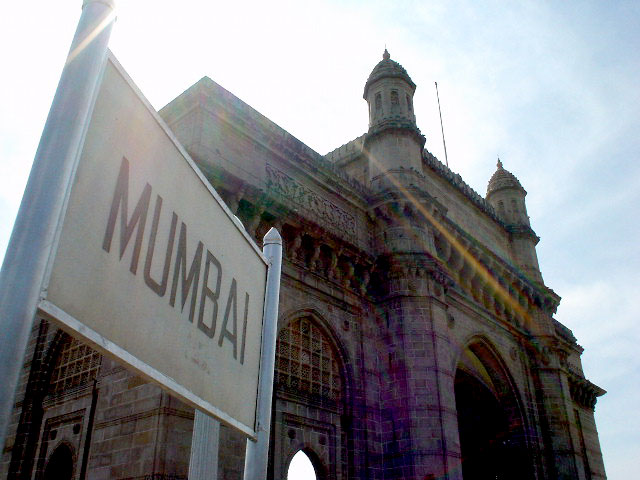
COLABA BECAME MUMBAI’S TOURIST ENCLAVE, not just because of its Western-style food available (including McDonald’s of course) and the nearby luxury Taj Mahal Hotel, but because of its proximity to arguably the architectural icon of the city, the famous Gateway of India, a triumphal arch that blends European architecture with Islamic motifs, built in honor of King George V and Queen Mary when they came to visit in 1911. While for tourists it served as a must-see and the starting point of a ferry to nearby Elephanta Island, for touts it served as a place to lurk and scam a couple hundred rupees. In recent history, it served as the perfect target for Islamic-extremist terrorist groups as it was the sight of a fatal bombing in 2003. Wandering around I saw no sign of another terrorist attack — although I suppose that’s the nature of terrorist attacks, to be hidden.
Anyway, the Gateway of India to me was a symbolic gateway of the old India I’d seen in the north and the progressive modern India surrounding me. I saw that Adidas and Nike had their mark already as I walked the streets passed the Victorian buildings built by the British, now occupied by stores and cafes. The British-influence was very apparent in the city, from the double-decker buses to the Prince of Wales Museum, which held priceless artifacts of the past. Nearby was the Jehangir Art Gallery, a Modern art gallery with contemporary artists’ interpretations of Indian history and culture. One exhibition was a retrospective of Indian painters Dattatraya C. Joglekar and Vishwanah G. Nageshkar, who had both painted during the hey day of Modernism in the early 20th century.
Victorian architecture continued to be apparent when I saw the High Court and the clock tower of Mumbai University, but just across the way, on the other side of the Oval Maiden field where citizens came to relax or play cricket, was the art deco sector, where streamlined residential buildings and movie theaters in pastel colors still stood since their construction in the 1920s and 30s.
Year-round tropical weather? Trendy waterfront promenades? Contemporary art and art deco architecture? More and more Mumbai was reminding me of Miami. (With a slight letter switcheroo, it’d be easy to convert “Mumbai” signs like in the picture above with “Miami.”)
I eventually made my way up passed the Hutatma Chowk Flora Fountain, St. Thomas’ Cathedral and the Horniman Circle to the Old Fort district, home of the tremendous Victoria Terminus Railway Station, the municipal building and my final destination of my stroll through town, the office of The Times of India newspaper and its affiliated publications.
AT THE SUGGESTION OF BLOGREADER DUSTY, I contacted her friend Cuckoo in Mumbai, a reporter at the Economic Times, published by the Times Group. She invited me to come over, one journalist to another, and I gladly accepted; it’s always nicer to get a perspective of a city from a local instead of from a guidebook written by Westerners. She escorted me up to the bull pen, the open area where she and her reporter colleagues sat around like news hounds do.
“So what is it that you want to see?” Cuckoo asked.
“Well, this is, as they say, your ‘beat,’” I said. “What should I see?”
Of course you’ve probably been asked this question before wherever you are from and draw a blank. In the meantime, she took a break and took me down the block to the Press Club of Mumbai, the exclusive members-only hangout for journalists in Mumbai and their guests.
“Do you ever get homesick?” Cuckoo asked me.
“Nah, I think I’m over that. Besides, there’s always a McDonald’s around so I’m never far from home.”
“Ah, the stereotypical American.”
That afternoon the club was busier than usual, for just across the street the big story of the day just happened: the new Chief Minister had been sworn in. Otherwise it was just another slow news day. Cuckoo and I got a table anyway amidst the other journalists for a drink and a thali meal. Immediately Cuckoo was impressed with my embrace of real Indian food — chapatti, dal, curd, etc. — and no longer was I a guy that just ate McDonald’s in her eyes.
“So do you call it Mumbai or Bombay?” I asked.
“Well, recently the right wing said it should be changed back to its original name Mumbai, but we’ve all grown up calling it Bombay and we just still call it Bombay. But it’s changing.”
Cuckoo and I hit it off fairly easily talking about travel, pop culture, politics and the ups and down of writing daily, and for me it was refreshing to be away from the usual backpacker inquisition of “What’s your name?” “Where are you from?” “Where have you been so far?” and “Where are you headed?” (Juanita [New Jersey, Cape Town] called this ultimately tiring but never-ending cycle of meeting like-minded backpackers, “Backpacker Hell,” which at the time in South Africa I would have disagreed with, but was slowly agreeing with, having been away for over a year thus far.)
Cuckoo introduced me to the manager of the Press Club’s Media Center, a cybercafe for journalists to work and surf the web. “This is my friend Erik. He’s a journalist from New York City.”
Wow, this “journalist” label has really been opening a lot of doors for me lately, I thought. Cuckoo told me that journalists in India were much more respected than (from her experience) ones in the U.K., a place where people wouldn’t even give a quote to the press without asking for a fee.
My fellow journalist went back to work but she pointed me in the direction of the west, to see the sights along Marine Drive and Chowpatty Beach in time for sunset. I took her suggestion and started walking through a non-touristy commercial area passed the locally famous art deco Metro theater, home of many Bollywood premieres. I continued to feel like I was in an Indian-influenced Miami — apparently complete with transvestites since Cuckoo informed me of its underground scene.
I walked through the affluent Malabar Hill district of luxury high-rises and the American Embassy and found a peaceful park called Breach Candy overlooking the Arabian Sea where the sun was just about set, turning the sky into blend of pinks and oranges, a phenomenon that never seems to get old like the questions of “Backpacker Hell.” A taxi took me back to Colaba where I passed out fairly early from my exhausted of covering my new “beat” that day, and the fact that I barely slept on the overnight bus ride the night before.
I WAS AWAKEN IN THE MIDDLE OF THE NIGHT by the sound of a large explosion and I immediately thought it might be another terrorist bombing at the nearby Gateway of India — but it was nothing more than a mere kid with a big firecracker bomb setting it off a couple of days early before the firecracker-a-plenty Diwali holiday. It remained a slow news day in my new beat after all and I went back to sleep.
Next entry: Sacred Stones and A New Home
Previous entry: Trinidad. Erik Trinidad.
Commenting is not available in this channel entry.
Comments for “My New Beat”
GREETINGS FROM CHENNAI! The way flights panned out (a whole other story), looks like I’m here for three more days before I fly back to Thailand. No matter, I’ve got good company here, plus the weather is nice and tropical, with the beach not too far away.
I didn’t realize how behind I was until this morning—but I’ll be here catching up!
HOLY LEG UPDATE: Good thing I chose Chennai as a place to go, as “untouristy” and far off it was; my friend Chrissy from New York here has a bunch of medical contacts and they are all assessing the hole. The good news is it’s healing much faster now; the bad news is the other day, I think I got a similar infected insect bite just five inches away from the first one, on the same leg! (We’ve caught it early and hopefully another pus drainage hole won’t be necessary.)
Posted by .(JavaScript must be enabled to view this email address) on 12/31 at 07:00 PM
The architecture is so European. Nice to see something other than the gateway to India. That arch never impressed me much - but Mumbai looks pretty nice.
Posted by Liz on 11/14 at 11:05 AM
Ok, my impression of India is changing for the better albeit….....slowly….......is that dog in the Nike pic sleeping or dead?
Posted by .(JavaScript must be enabled to view this email address) on 11/14 at 12:55 PM
i wanna get my masters at Mumbai University.
rik, sad to say..ODB from wutang passed away saturday. he just missed the reunion concert at continental arena the night b4. died in wutang studios though not rockafella…RIP
Posted by .(JavaScript must be enabled to view this email address) on 11/14 at 01:44 PM
Come on Janice, when you get to China, that dog will be food LOL
Posted by Liz on 11/14 at 02:32 PM
Liz: I am seriously considering becoming a vegetarian….................
Posted by .(JavaScript must be enabled to view this email address) on 11/14 at 02:40 PM
C’mon Janice… it’s all part of the adventurious new chapter in your life!
Posted by .(JavaScript must be enabled to view this email address) on 11/14 at 02:57 PM
I’m back and totally lost…..
Janice, the dog in the picture looks like the dogs I saw on the beach last week…..they were lying on the beach looking lifeless but were alive and “sunbathing”
Erik, glad you are still kicking around. I started watching a Discovery Series last night called “Ulitimate Survival: Expedition Everest” and it gave me a whole new perspective on your trek. Very interesting and I now understand more sersiously your brush with death!
Now officially Mrs. Lisa!
Posted by .(JavaScript must be enabled to view this email address) on 11/14 at 06:42 PM
Td0t: Adventurous? Yes! Wanna throw up? No!!!
Mrs. Lisa: Welcome back! Missed ya!Posted by .(JavaScript must be enabled to view this email address) on 11/14 at 07:06 PM
Janice: Don’t worry about the Dog meat. If you seriously want to avoid throwing up in Taiwan steer clear of deep-fried fermented tofu. It’s everywhere and it’s guaranteed to give your gag reflex some exercise.
Posted by .(JavaScript must be enabled to view this email address) on 11/14 at 07:49 PM
Td0t: I turned down Taiwan. Heading to Chansha, China at the end of this week for one year! Have you been there?
Posted by .(JavaScript must be enabled to view this email address) on 11/14 at 08:22 PM
WHEAT - phd it at mumbai university!
Posted by .(JavaScript must be enabled to view this email address) on 11/14 at 08:41 PM
Wouldn?t it be more convenient for everyone if terrorists announced their intentions in writing in advance?
Posted by .(JavaScript must be enabled to view this email address) on 11/14 at 09:22 PM
Erik & Lisa…..I too watched Expedition Everest last night and thanks to you Erik, I saw things that were familiar! It was like I had been there, but only through your eyes! LOL
Great show.Posted by .(JavaScript must be enabled to view this email address) on 11/14 at 10:47 PM
AR6… here we go! Whehoo! It’s the 16th in Japan.
 So here’s the standard request - pls don’t give away who was eliminated in your comments. It takes me a day to download the show off the net, so if you give it away, you spoil it for me. Many thanks
 Posted by Liz on 11/14 at 11:13 PM
Liz where do you DL it from?
Posted by Anthony on 11/15 at 12:34 AM
Anthony - http://www.suprnova.org You will also need to download BitTorrent which is a P2P program. It usually takes about 12 hours before the episode appears online.
Posted by Liz on 11/15 at 01:55 AM
Hey Erik-
I got your postcard yesterday- Thanks! You’re awesome=D
Posted by .(JavaScript must be enabled to view this email address) on 11/15 at 04:29 AM
Wait, I’m confused; which is more “disgusting”: eating the dog or the horse (raw I may add)?
Posted by .(JavaScript must be enabled to view this email address) on 11/15 at 04:42 AM
WHEAT/MARKYT: Hey, if you couldn’t track down a copy of “Dhoom,” no worries, I got the real (non-bootleg) DVD with subtitles at the mall yesterday. I’ll send it in my next shipment and you have to watch it with Lance and The Fish Crew.
Posted by .(JavaScript must be enabled to view this email address) on 11/15 at 04:45 AM
DA VINCI CODE FANS: Wow, Tom Hanks as Robert Langdon?
Posted by .(JavaScript must be enabled to view this email address) on 11/15 at 04:56 AM
MORE TO COME…
Posted by .(JavaScript must be enabled to view this email address) on 11/15 at 05:01 AM
MICHELLE: I sure that policy was shot down by the Bush administration. (It was probably Powell’s idea, that’s why they “fired” him.)
Posted by .(JavaScript must be enabled to view this email address) on 11/15 at 05:03 AM
So excited for AR6! ERIK: looks like we will be in Thailand-Krabi Dec. 10-14th? Will you still be there?
Posted by .(JavaScript must be enabled to view this email address) on 11/15 at 07:59 AM
Tom Hanks…boooo…I guess it’s definitely directors pick….but’ i’m sure he’ll do well…
i know he’ll need something big after this wack ass Polar Express movie…hahah…. Elf is WAY more a classic than that…..
Posted by .(JavaScript must be enabled to view this email address) on 11/15 at 12:43 PM
Erik - how did you get the hotel deal in Macau? Did you just go to a travel agent in Hong Kong? I’ll be passing thru HK (on my way to visit Jan in China) and can’t pass up an opportunity to gamble! I love the casino
Posted by Liz on 11/15 at 01:53 PM
Liz, old habits die hard…...I was at the casino in the Dominican and sat down at the slot machine and immediately thought of you!
Posted by .(JavaScript must be enabled to view this email address) on 11/15 at 02:17 PM
hey erik, its me your kuya ombet from phils. its my 1st time to read your article and saw your adventurous work and it`s great!! im here in texas already with tita baby, probably goin to work as a nurse by january. so your in india already and its a great story and pictures ive seen, sorry if its the 1st time that i saw your adventurous work but now im goin to see it and read it more often.
Posted by .(JavaScript must be enabled to view this email address) on 11/15 at 05:03 PM
You brought Mumbai alive for me on this blog. And hey, that was my University that you saw! loved the photograph of the crow eyeing the sunset. wish i was that crow, ahem… maybe not!
Posted by .(JavaScript must be enabled to view this email address) on 11/15 at 05:10 PM
Here’s something for the current SACR (Slow Ass Connection Rate) time we are in…
requires flash:
http://www.miniusa.com/crm/jumpgame/jumpgame.jsp
Posted by .(JavaScript must be enabled to view this email address) on 11/15 at 05:32 PM
Hey Erik,
Just wanted to let you know that I’m going to Spain this Friday to the following Monday. Keep it up! And I hope you have a great Thanksgiving!
Posted by .(JavaScript must be enabled to view this email address) on 11/15 at 05:43 PM
AVIVA: Yeah, could be… the way things are looking I probably won’t head south into Malaysia and Singapore until after the new year, so I’ll be in the Thailand neighborhood about that time… Keep in touch, you and Moe may end up on “The Trinidad Show” once again…
Posted by .(JavaScript must be enabled to view this email address) on 11/16 at 04:10 AM
LIZ: Yeah, just show up at the Macau ferry terminal (it’s like a shopping mall, just like everything else in HK)... There are last-minute deals right outside the gates at one of the agents around. I’m sure they’ll find YOU.
Posted by .(JavaScript must be enabled to view this email address) on 11/16 at 04:13 AM
OMBET: Glad you’re reading along! So you won’t be in Phils when I get there, huh?
Posted by .(JavaScript must be enabled to view this email address) on 11/16 at 04:14 AM
RISA: Woohoo! See if you can find my camera in Valencia!

Posted by .(JavaScript must be enabled to view this email address) on 11/16 at 04:16 AM
DUSTY: Glad I could brighten your day… Mumbai rocks!
Posted by .(JavaScript must be enabled to view this email address) on 11/16 at 04:17 AM
Okay, so I’m slow - when are you down Thailand way??
And, I could buy Tom Hanks, or someone a little skinnier (he’s gotten a little chubby in his older age) as Robert Langdon as I’ve pictured him… someone a little nerdy and not the hottest guy around (not like Liam Neeson or Jude Law)...
Posted by .(JavaScript must be enabled to view this email address) on 11/16 at 05:53 AM
And, the Taj Mahal Hotel looks like you could be in Victoria, BC - but, same general time with the architecture, I imagine. It looks identical. Interested - with the water and boats and all that jazz… Beautiful pics, of course.
Posted by .(JavaScript must be enabled to view this email address) on 11/16 at 02:07 PM
SHARE THIS TRAVEL DISPATCH:
Follow The Global Trip on Twitter
Follow The Global Trip in Instagram
Become a TGT Fan on Facebook
Subscribe to the RSS Feed
This blog post is one of over 500 travel dispatches from the trip blog, "The Global Trip 2004: Sixteen Months Around The World (Or Until Money Runs Out, Whichever Comes First)," originally hosted by BootsnAll.com. It chronicled a trip around the world from October 2003 to March 2005, which encompassed travel through thirty-seven countries in North America, South America, Africa, Europe, and Asia. It was this blog that "started it all," where Erik evolved and honed his style of travel blogging — it starts to come into focus around the time he arrives in Africa.
 Praised and recommended by USA Today, RickSteves.com, and readers of BootsnAll and Lonely Planet's Thorn Tree, The Global Trip blog was selected by the editors of PC Magazine for the "Top 100 Sites You Didn't Know You Couldn't Live Without" (in the travel category) in 2005.
Next entry:
Sacred Stones and A New Home
Previous entry:
Trinidad. Erik Trinidad.
THE GLOBAL TRIP GLOSSARY
Confused at some of the jargon that's developed with this blog and its readers over the years? Here's what they mean:
BFFN: acronym for "Best Friend For Now"; a friend made on the road, who will share travel experiences for the time being, only to part ways and lose touch withThe Big Trip: the original sixteen month around-the-world trip that started it all, spanning 37 countries in 5 continents over 503 days (October 2003–March 2005)
NIZ: acronym for "No Internet Zone"; a place where there is little to no Internet access, thus preventing dispatches from being posted.
SBR: acronym for "Silent Blog Reader"; a person who has regularly followed The Global Trip blog for years without ever commenting or making his/her presence known to the rest of the reading community. (Breaking this silence by commenting is encouraged.)
Stupid o'clock: any time of the early morning that you have to wake up to catch a train, bus, plane, or tour. Usually any time before 6 a.m. is automatically “stupid o’clock.”
The Trinidad Show: a nickname of The Global Trip blog, used particularly by travelers that have been written about, who are self-aware that they have become "characters" in a long-running story — like characters in the Jim Carrey movie, The Truman Show.
WHMMR: acronym for "Western Hemisphere Monday Morning Rush"; an unofficial deadline to get new content up by a Monday morning, in time for readers in the western hemisphere (i.e. the majority North American audience) heading back to their computers.
1981ers: people born after 1981. Originally, this was to designate groups of young backpackers fresh out of school, many of which were loud, boorish and/or annoying. However, time has passed and 1981ers have matured and have been quite pleasant to travel with. The term still refers to young annoying backpackers, regardless of year — I guess you could call them "1991ers" in 2013 — young, entitled millennials on the road these days, essentially.
Spelling or grammar error? A picture not loading properly? Help keep this blog as good as it can be by reporting bugs.